
5 things to know about the DARPA Robotics Competition
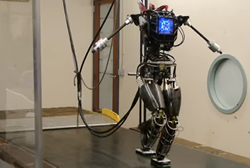 From Lyndsey Gilpin for TechRepublic: The DARPA Finals will be held in Pomona, California from June 5-6, and the robots that come out of it could make some big impacts (or take over the world). Here's a summary of what you should know.
1. It began with the desire to improve humanitarian assistance and disaster relief
The Fukushima disaster in Japan in 2011 was an inspiration for the competition, according to Dr. Gill Pratt, the DRC program manager. The team realized we never know what the next disaster will be, but we need technology to help us better address these types of disasters with better tools and techniques. And robots have massive potential.
"The particular part that we've chosen to focus on, here, is technology for responding during the emergency part of the disaster during the first day or two," Pratt said in a media briefing several weeks before the competition. "So this is not about, for instance, robotics for doing the restoration of the environment many, many weeks, years after the disaster, but rather the emergency response at the beginning." Cont'd..
Featured Product
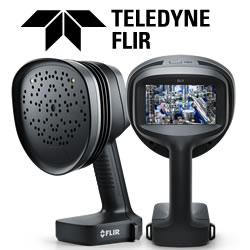
FLIR Si1-LD - Industrial Acoustic Imaging Camera for Compressed Air Leak Detection
The FLIR Si1-LD is an easy-to-use acoustic imaging camera for locating and quantifying pressurized leaks in compressed air systems. This lightweight, one-handed camera is designed to help maintenance, manufacturing, and engineering professionals identify air leaks faster than with traditional methods. Built with a carefully constructed array of MEMS microphones for high sensitivity, the Si1-LD produces a precise acoustic image that visually displays ultrasonic information, even in loud, industrial environments. The acoustic image is overlaid in real time on a digital image, allowing you to accurately pinpoint the source of the sound, with onboard analytics which quantify the losses being incurred. The Si1-LD features a plugin that enables you to import acoustic images to FLIR Thermal Studio suite for offline editing, analysis, and advanced report creation. Field analysis and reporting can also be done using the FLIR Acoustic Camera Viewer cloud service. Transferring of images can be managed via memory stick or USB data cable. Through a regular maintenance routine, the FLIR Si1-LD can help facilities reduce their environmental impact and save money on utility bills.