
How Freight Visibility Is Redefining U.S. Manufacturing Supply Chains
.jpg)
With freight visibility, you can search for alternative sources and routes when shipments hit a snag. You can find the best ways to increase your resources for demand spikes, and you can search for the most cost-effective solutions during demand droughts.
The 'Halo Effect' of Manufacturing Facility Location: Why Smart Manufacturers Are Choosing Locations Near Complementary Businesses
.jpg)
This strategy is not about simple convenience; it's about creating a powerful, mutually reinforcing "halo effect" of shared success, instant market credibility, and profound operational synergy across engineering, tooling, fabrication, and logistics networks.
Why Manufacturers Must Rebuild Their Factories Around the Buyer
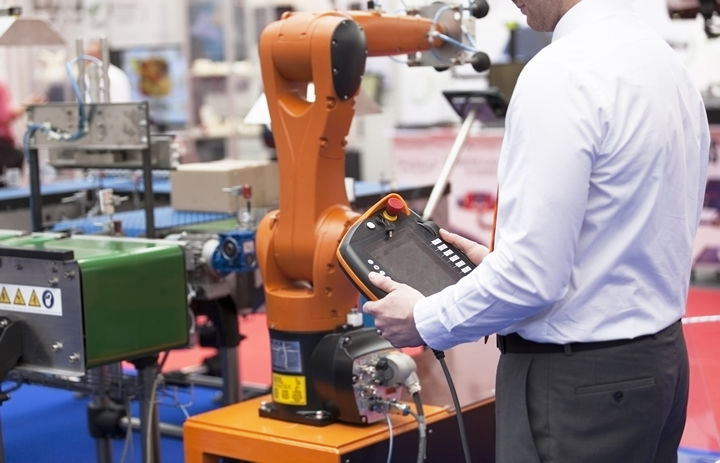
Today's generation of buyers expects products built to fit their needs, transparent pricing, reliable delivery, and ongoing support that extends beyond the initial sale.
Manufacturing's AI Reality Check: Why Governance Is the Missing Link

Governance is the architecture that transforms AI experiments into enterprise assets. Without it, even successful models become liabilities.
Why Economic Uncertainty Demands a Real-Time Manufacturing Strategy
.jpg)
Proactive manufacturers now treat economic uncertainty not as isolated incidents, but as ongoing tests of their operational readiness and digital maturity.
Strengthening Cybersecurity Measures as Threat Actors Set Their Sights on the Manufacturing Industry
.jpg)
To manage these risks at scale, organizations need modern Privileged Access Management (PAM). Unlike legacy access controls, modern PAM enforces least-privilege access, monitors high-risk accounts in real time and integrates seamlessly with broader security ecosystems.
9 Evidence-Backed Predictions for the Next Decade of Auto Part Manufacturing
.jpg)
As the industry navigates the next decade, it will adapt to the digital transformation and the emergence of smart vehicles. Here are nine evidence-backed predictions for the next 10 years of auto part manufacturing.
How Real-Time Manufacturing Operations Drive Competitive Advantage in Volatile Markets
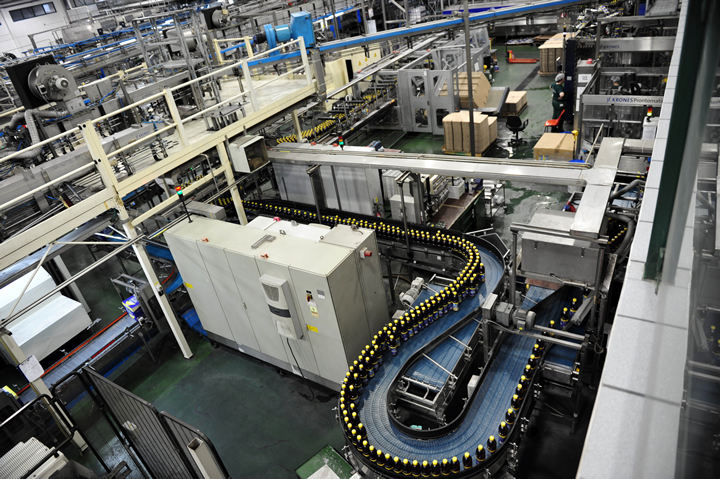
Manufacturing executives confronting today's operational challenges recognize a fundamental truth: traditional execution systems designed for stable markets have become organizational liabilities.
How to Employ AI in Manufacturing Sales

AI agents can help ensure every interaction across every channel contributes to a single, intelligent sales motion, including always-on gathering insights like on which SKUs are trending to develop and implement real-time optimizations.
When Clean is the Key to Precision

Micro molded parts are often invisible to the naked eye, measured in millimeters or fractions of millimeters, with features that can be smaller than a human hair. In this context, a single dust particle can disrupt form, fit, or function.
"Building for the Surge: How to Prepare Your Factory Storage for Times of Peak Demand"
.jpg)
To truly manage seasonal peaks efficiently and safely, facilities need a storage infrastructure designed to flex with changes in demand, regardless of whether they're seasonal, planned, or one-time occurrences.
Why Manufacturers Must Balance Proactive Cybersecurity with Verified Recovery

Under more pressure than ever to protect their systems, many organizations are still acting on the assumption that proactive prevention will keep their operations safe and running. In reality, hackers can break through first walls of defense and wreak operational havoc.
From Heat to Shock: A Materials Playbook for Gigacasting Automation
.jpg)
Gigacasting automation is the most innovative pathway for creating inexpensive yet structurally sound technologies in some of the most intense industries on the planet.
The Data Imperative for Smart Microfactories: Enabling Real-Time Agility and Resilience
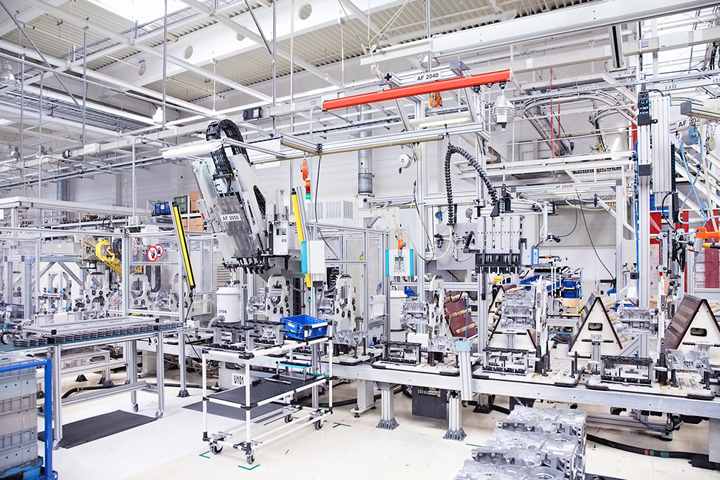
Microfactories, digital twins, and AI-first manufacturing strategies are not science fiction, they are here. But their success depends not just on sensors and robotics, but on how well data is connected, contextualized, and consumed.
Understanding End-to-End Configuration: A Primer

End-to-end configuration offers a strategic solution for unifying data, improving collaboration across departments, and enabling scalable, service-ready product operations.
Records 1 to 15 of 1277
Featured Product
Cold air to -50°F (-46°C) from your compressed air supply - with no moving parts!
A low cost, reliable, maintenance free solution to a variety of industrial spot cooling problems. Using an ordinary supply of compressed air as a power source, vortex tubes create two streams of air, one hot and one cold, with no moving parts.
Vortex tubes can produce:
"¢ Temperatures from -50° to +260°F (-46° to +127°C)
"¢ Flow rates from 1 to 150 SCFM (28 to 4248 SLPM)
"¢ Refrigeration up to 10,200 Btu/hr. (2571 Kcal/hr.)
Temperatures, flows and refrigeration are adjustable over a wide range using the control valve on the hot end exhaust.
EXAIR Vortex Tubes are constructed of stainless steel. The wear resistance of stainless steel, as well as its resistance to corrosion and oxidation, assures that EXAIR Vortex Tubes will provide years of reliable, maintenance-free operation. https://exair.co/184_530
Manufacturing and Automation - Featured Company

maxon group
maxon is a leading supplier of high-precision DC brush and brushless servo motors and drives. These motors range in size from 4 - 90 mm and are available up to 500 watts. We combine electric motors, gears and DC motor controls into high-precision, intelligent drive systems that can be custom-made to fit the specific needs of customer applications.