
How to invest in 3D printing

Iona Bain for IG:  3D printing is a sector that no investor interested in technology can ignore. But that doesn’t mean it’s an easy sector to invest in. It’s in its infancy after all.

Its biggest name, Stratasys, has seen its shares plunge by 75% over the past four years, and the competitive landscape is changing continually.

3D printing, or additive manufacturing, is a process of adding and fusing materials under computer control to make three—dimensional objects from a digital file. It already serves sectors from manufacturing to aerospace, architecture to healthcare, and has evolved from a niche startup area into a maturing industry with investment from the likes of GE, Hewlett—Packard and Microsoft.

What has been called the ‘3D printing hype curve’ saw valuations soar, then plunge in 2015, as investors woke up to the reality that groundbreaking and innovative technology does not guarantee speedy commercial success. But in November 2017, Porsche and the venture capital arms of Microsoft and Siemens invested $30 million in 3D printing startup Markforged, whose customers include GE, Airbus and Ford. That came after GE snapped up two European players, highlighting how industrial giants are betting that the emerging technology will transform manufacturing.   Full Article:

Featured Product
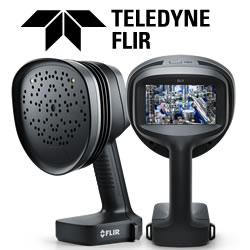
FLIR Si1-LD - Industrial Acoustic Imaging Camera for Compressed Air Leak Detection

FLIR Si1-LD - Industrial Acoustic Imaging Camera for Compressed Air Leak Detection

The FLIR Si1-LD is an easy-to-use acoustic imaging camera for locating and quantifying pressurized leaks in compressed air systems. This lightweight, one-handed camera is designed to help maintenance, manufacturing, and engineering professionals identify air leaks faster than with traditional methods. Built with a carefully constructed array of MEMS microphones for high sensitivity, the Si1-LD produces a precise acoustic image that visually displays ultrasonic information, even in loud, industrial environments. The acoustic image is overlaid in real time on a digital image, allowing you to accurately pinpoint the source of the sound, with onboard analytics which quantify the losses being incurred. The Si1-LD features a plugin that enables you to import acoustic images to FLIR Thermal Studio suite for offline editing, analysis, and advanced report creation. Field analysis and reporting can also be done using the FLIR Acoustic Camera Viewer cloud service. Transferring of images can be managed via memory stick or USB data cable. Through a regular maintenance routine, the FLIR Si1-LD can help facilities reduce their environmental impact and save money on utility bills.